The Things We Learn by Making
Why making something by hand changes the way we understand the things we use.
There are things that are difficult to understand until we make them ourselves.
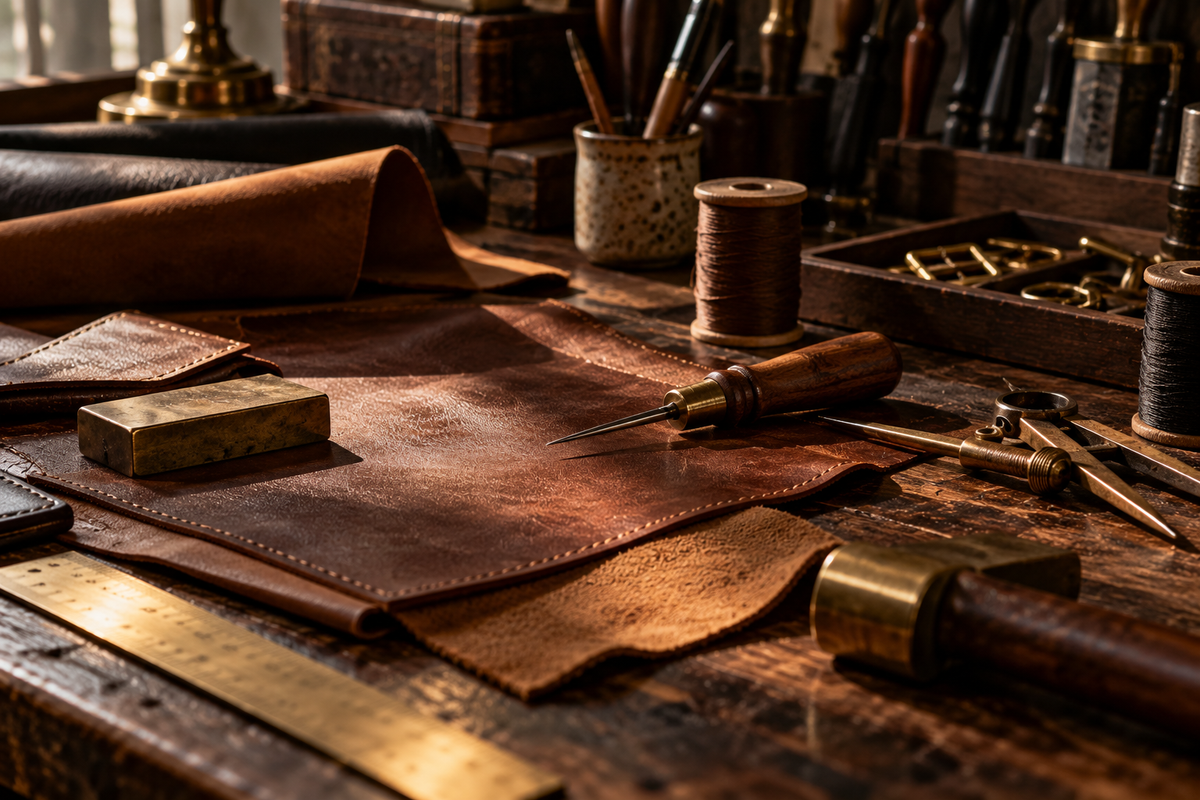
The first time a piece of leather is cut by hand, the material behaves differently from what we imagined.
The first time a needle passes through a thick piece of cloth, we begin to understand why certain stitches exist.
The first time a piece of wood is shaped slowly with a hand tool, we discover that the material has its own preferences.
Making teaches patience because materials do not care how quickly we want them to behave.
The Material Has a Voice
Modern manufacturing has made it possible to make almost anything with extraordinary consistency.
That consistency is useful.
But handmade work introduces something different.
Leather varies.
Wood has a grain.
Metal has a temper.
Fabric stretches in one direction and resists in another.
Even a sheet of paper has a character that becomes noticeable once you pay attention.
A good maker learns to work with these differences rather than simply forcing the material into submission.
This is one of the quiet lessons of craftsmanship.
The material is not an obstacle.
It is part of the conversation.
Learning Through the Hands
There is a kind of knowledge that cannot be completely transferred through books.
You can read about sharpening a knife.
You can watch someone demonstrate it.
But the first time you sharpen one yourself, you discover how easily the angle changes, how the pressure affects the edge and how quickly a small mistake becomes visible.
The same thing happens with sewing, woodworking, leatherwork, watchmaking and countless other crafts.
The hands begin to notice things before the mind has found the words to describe them.
That knowledge accumulates slowly.
A movement becomes more controlled.
A cut becomes cleaner.
A surface becomes more consistent.
Eventually, the maker stops thinking about every individual movement.
The work becomes quieter.
The Value of Repetition
Craftsmanship is often presented as a talent.
But much of it is repetition.
The same stitch.
The same cut.
The same movement of a tool.
Again and again.
Repetition can appear boring from the outside.
Inside the workshop, it is where skill is built.
A person who has performed the same operation hundreds of times begins to notice tiny differences that a beginner would never see.
The work becomes more precise not because the maker is concentrating harder, but because experience has changed what they are capable of noticing.
This is why old crafts can be difficult to learn.
The knowledge is often hidden inside thousands of small decisions.
When Imperfection Becomes Character
Handmade objects are rarely perfectly identical.
That is part of their appeal.
Two objects made by the same person from the same materials may still contain small differences.
A stitch may sit slightly differently.
A surface may carry a subtle variation.
An edge may reveal the movement of the hand that shaped it.
Industrial production tries to eliminate these differences.
Craft often preserves them.
This does not mean that poor workmanship should be celebrated.
Good craftsmanship still requires accuracy, discipline and control.
The difference is that the final object can retain evidence of the person who made it.
Making Changes How We Consume
Perhaps the most interesting consequence of learning a craft is what happens after we stop making.
We begin to look differently at the things we buy.
A leather bag no longer appears to be simply a bag.
We notice the stitching.
We notice the edge finishing.
We notice the way the leather has been cut.
A jacket becomes a collection of decisions about cloth, construction, proportion and movement.
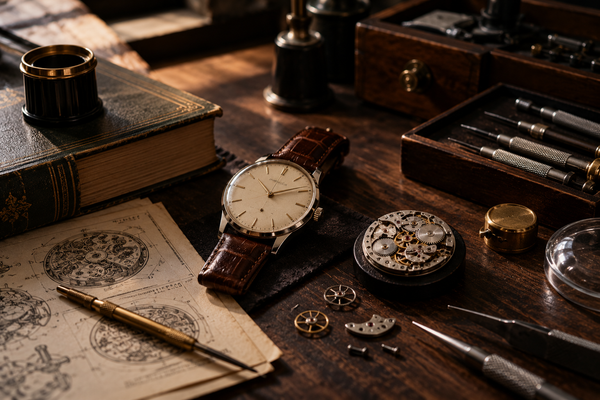
A watch becomes a mechanism rather than a decorative object.
Understanding how something is made changes the way we value it.
We become less impressed by complexity for its own sake.
We start looking for evidence of thought.
The Slow Education of Craft
Not everyone needs to become a craftsman.
But everyone can learn from making something.
A small project is enough.
Repair a piece of leather.
Sharpen a tool.
Polish an old object.
Learn to sew a button properly.
Take apart something that no longer works and try to understand why.
The objective is not necessarily to produce something valuable.
The objective is to pay attention.
Making forces us to slow down long enough to understand the relationship between material, tool and hand.
That understanding follows us back into everyday life.
We become more patient with objects.
More curious about their construction.
More willing to repair them.
And perhaps more selective about what we choose to own.
That may be one of the quiet rewards of craftsmanship.
It teaches us not only how to make things.
It teaches us how to see them.